Train, Bus or Walk: Pick the Crossing That Suits the Day
Train, bus or walk across an unfamiliar city: compare door-to-door effort, street views and timing to choose a crossing that suits your day.
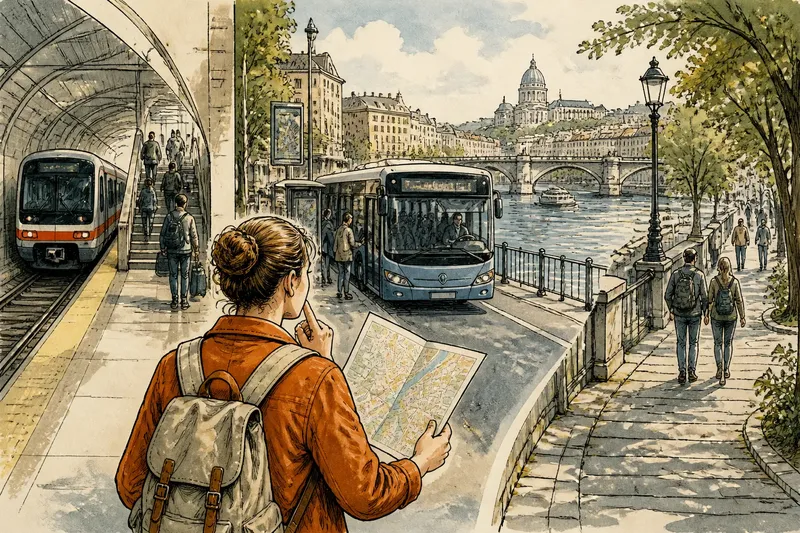
Train, bus or walk across an unfamiliar city? The right crossing depends on what you need at the other end: a timely arrival, a view of the streets or a gentler use of your energy. Compare the whole journey, not just the line on a map.
What matters most on this crossing?
Start with the purpose of the journey. Getting to a timed museum entry calls for a different choice from travelling between lunch and an open afternoon. Before checking routes, decide which of these matters most:
- Arrival time: If you have a fixed appointment, favour the clearest route with the fewest uncertain connections; otherwise, a slower but more interesting journey may suit.
- What you want to see: If you want street-level detail and the freedom to pause, walk; if you want to watch neighbourhoods pass with less effort, consider a bus; if the view is unimportant, a train may be a straightforward link.
- Effort: If stairs, standing or carrying a bag would be tiring, check those demands as well as the time in motion; if they look awkward, choose a simpler route or combine modes.
A short journey can still feel demanding if it involves stairs and a crowded platform. A longer walk can feel manageable if the route is clear and offers places to pause. The useful comparison is the effort from door to door, not a single route estimate.
When is a train the better fit?
Choose a train when you want to cross a larger stretch of the city without being exposed to surface traffic, or when the rail network links your starting point and destination directly. It can be a sensible choice if you are tired, the weather is poor or arriving promptly matters more than seeing each street.
Check the whole rail journey, not only the ride between stations. You may need to find an entrance, buy or validate a ticket, reach the right platform, change lines and walk back to street level. A direct train can be simple; an unfamiliar transfer may require more attention than the route map suggests.
Rail is less suited to a crossing whose purpose is to see the city at street level. Stations may be underground or away from the streets you hoped to observe. Use the train as a practical link, then leave time for a separate walk in the neighbourhood if that is what interests you.
When does a bus suit the day?
A bus is a middle choice when you want to travel through the city without walking the whole way. From the window, you can follow the shift between districts, notice shopfronts and parks, and see how streets connect. Unlike a train, a bus usually keeps the route visible, though traffic and diversions can make arrival less predictable.
Check the direction as well as the stop name. A stop across a wide road may be awkward to reach, and a bus may travel away from your destination before turning back. Confirm the destination displayed on the vehicle and use next-stop information if it is available. If the bus is crowded or your luggage is cumbersome, the effort of boarding and standing may outweigh the benefit of avoiding a walk.
Take a bus when the route itself interests you and you can be flexible about arrival. With a narrow time window, a rail link or direct walk may be easier to judge, depending on the city and the route.
When is walking the best crossing?
Walking suits a crossing that feels manageable and gives you something to notice along the way. You can adjust the route around a market, public garden or lively square, and you do not need to find a platform or wait at a stop. In a compact centre, a walk may connect places that feel separate on a transport map.
Consider the route’s less obvious demands: steep streets, large junctions, exposed pavements or stretches with few landmarks. Check the pedestrian route rather than assuming the direct line is walkable. Think about the surface, shade, weather, footwear and what you are carrying. If the full crossing looks tiring, walk part of it and ride the rest.
Walking is less appealing when the crossing is long, the weather is uncomfortable or you need to arrive fresh. It is not worth turning every transfer into a scenic stroll; sometimes the streets between two places are simply ground to cover.
How do you compare the whole journey?
Use a map app as a starting point, then compare the parts it may not make obvious. For each option, check the time and effort involved in reaching the stop or station, waiting, transferring, riding and walking the final stretch.
- Train: If the route is direct and station entrances are convenient, it may be a simple choice; if it needs an unfamiliar transfer or awkward stairs, compare a bus or walk instead.
- Bus: If the stop is on the correct side of the road and the route heads towards your destination, it may suit a flexible crossing; if you would need a difficult street crossing or a long detour, check another option.
- Walk: If the pedestrian route is clear and the terrain feels comfortable, it gives you control over pauses; if it includes slopes or junctions that concern you, shorten the walk or ride part of the way.
Then consider what the journey offers. A train may ask little attention but provide few street views. A bus may show you the city while requiring you to watch for your stop. A walk takes more physical effort but lets you pause or turn down a side street. Choose the option whose demands feel worthwhile for the day.
Which crossing fits your situation?
Use these checks to turn your priority into a route choice. Each one pairs an observable feature with a decision and an alternative.
- Fixed appointment: If the route has a direct connection and a clear arrival point, choose it; if it depends on several unfamiliar links, consider a simpler walk or direct bus where available.
- Interest in street views: If the bus route passes through districts you want to see, take it; if you want to pause and explore details, walk instead.
- Low energy: If the station entrance and platform are easy to reach, a train may reduce effort; if they involve tiring stairs or transfers, look for a direct bus or walk a manageable section.
- Luggage: If a route has few stairs and transfers, it may be easier with a bag; if boarding a crowded service looks difficult, choose a less crowded option or split the crossing with a walk.
- Open afternoon: If you have time and want to stop along the way, walk; if you want to see more ground with less effort, take a bus instead.
Imagine you are staying near a central station and want to reach a riverside district before an open-ended afternoon. You begin with a light bag, dry weather and fresh legs, then check the pedestrian route and see that it passes streets you want to explore. Walking would give you the most freedom to pause; if rain begins before you leave, you could switch to a direct bus, spending less time exposed to the weather but seeing fewer details at close range.
What should you check before choosing a city crossing?
These are the questions most likely to change your decision. Check the route against your actual plans and comfort, rather than treating any transport mode as best in every situation.
Should I choose the fastest option?
Choose it when arriving promptly matters more than the journey itself, but compare the full door-to-door route rather than ride time alone. A quick train can involve a complicated transfer, while a clear walk may be easier.
Is a bus a good way to see an unfamiliar city?
A bus can give you a street-level view and a sense of how districts relate. It offers less freedom to stop than walking, so choose it when you want to observe from the route rather than explore each detail.
How can I tell whether a walk is too much?
Consider your energy, footwear, weather, luggage, slopes and crossings. If one part gives you pause, shorten the walk or use a ride for that section rather than treating the whole distance as an all-or-nothing choice.
Can I combine different ways of crossing?
Yes. You could take a train or bus to a convenient district and walk the final part, or walk to a direct bus stop instead of making a transfer.
What is not worth planning too closely?
It is rarely useful to compare every route variation before you know how the day feels. You do not need to optimise a crossing for both speed and sightseeing, since those aims can pull in different directions. Set a simple priority, check the route’s main practical demands and leave room to change mode if your energy or the weather shifts.
For a city crossing, train, bus or walk is a choice about how you want to spend time and effort, not a contest with one universal winner. Before setting off, check the route direction and any access detail that could change your choice; then keep an alternative in mind in case the day turns out differently.