A Rainy Arrival Evening with No Reservations
A rainy arrival evening with no reservations can still feel easy: get dry, choose a suitable nearby meal and keep the rest of the night open.
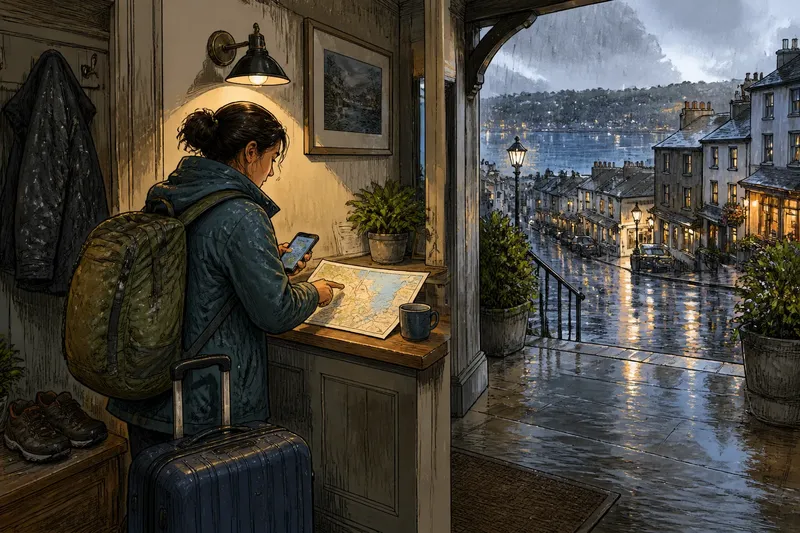
Where should you eat on a rainy arrival evening with no reservations, when you are tired and still carrying your bags? Get somewhere dry, choose one suitable meal nearby, and leave the rest of the night open. The first evening does not need to become a tour of the neighbourhood.
The aim is not to find the city’s best restaurant. It is to make the next few hours comfortable without committing to a long walk, an elaborate meal or a tightly timed plan. A little checking on the spot can help, even if you have not researched the area in advance.
What should you do before looking for dinner?
Go to your accommodation first if that is practical. A dry place to put your bag, remove a wet outer layer and check your phone is more useful than judging restaurants from a doorway in the rain. If you cannot check in yet, find a sheltered public place nearby, such as a station concourse or covered arcade, or a hotel lobby where visitors are welcome.
Establish what is available. Check your host’s arrival information for the entrance and check-in arrangements. At a hotel, ask whether the kitchen is still serving and whether staff can suggest a nearby option. Treat any recommendation as a starting point, not an obligation.
Once indoors, sort out your immediate needs. Put your phone somewhere it can dry, hang a damp coat where it will not drip onto your belongings, and change shoes if you brought a spare pair. A towel or dry layer may be enough to make a short trip manageable. Do not go back out simply because you feel you ought to make the evening count.
How do you find one nearby meal?
Start with a small search area rather than scanning the whole destination. Use a map to see what is within a comfortable walk, then check current opening information and the route. A place that looks close on a screen may involve a steep hill, an exposed road or an awkward crossing. In bad weather, the route matters as much as the restaurant.
Look for food that suits your energy, appetite and circumstances. That might be a café with a short menu, a casual counter-service place, a neighbourhood pub, a takeaway or food where you are staying. If you have dietary needs, check the menu directly or contact the venue rather than relying on a vague label or an old listing.
For the first night, a clear menu, straightforward ordering and a manageable route are useful signs. A restaurant requiring a long wait, formal clothing or a complicated booking may be a good choice another evening. Here, convenience means choosing food that fits the conditions.
Say you arrive at a guesthouse in a rainy coastal town with damp shoes and no dinner booking. You check the host’s local map and spot a café that appears to be an easy walk. Before leaving, you confirm it is open and check the route; the café is serving, but the approach includes an exposed stretch. You decide to ask the host about a nearby takeaway instead, then order food to collect under the guesthouse’s shelter. The result is a meal without a wet walk, though you give up the change of scene a sit-down café might have offered.
Should you go out, order in or eat where you are?
Choose based on how you feel now, not how you expected to feel before travelling.
- Go out nearby: Check that the route feels manageable and the venue is open; if both are true and you want a change of scene, walk there, but if either is not, choose takeaway or food indoors.
- Order takeaway: Check that the venue delivers to your address or offers practical collection; if it does, place an order, but if it does not, ask your accommodation about its food or nearby alternatives.
- Eat at your accommodation: Check whether food is available and when it is served; if the kitchen is open or food is provided, stay in, but if not, check a nearby shop or takeaway.
- Buy something simple: Check that a shop is open and accessible; if it is, choose food that suits your needs, but if not, ask staff for a current option rather than making an unnecessary trip.
These are alternatives, not a ladder of success. A sit-down dinner is not automatically better than takeaway, and staying in does not mean you have missed the destination. If you are travelling with others, ask what would make the evening easiest for each person, then agree on a simple option. One clear decision is usually kinder than a long discussion while everyone is hungry.
What should you check before setting off?
Make a few checks that could change whether the plan works. If a point does not affect your choice, there is no need to turn it into a research session.
- Opening status: Check that the venue is open now and its kitchen or food counter is serving; if it is, keep it as an option, but if not, move to another nearby venue or food available at your accommodation.
- Route and shelter: Check for a direct route and covered streets, an arcade or a sheltered entrance; if the route feels manageable, go on foot, but if it is exposed or awkward, choose delivery, collection nearby or an indoor meal.
- Access: Check for steps, steep sections, uneven paving and an entrance you can identify in poor light; if access suits your needs, continue, but if it does not, ask the venue about another entrance or choose a more accessible option.
- Payment and ordering: Check that you can pay in an accepted way and understand whether ordering is at a counter, table or app; if the process works for you, proceed, but if it does not, ask staff about an alternative or choose another venue.
- Food needs: Check the current menu or contact the venue if an allergy or dietary requirement affects your choice; if the venue can explain a suitable option, consider it, but if details remain unclear, choose food whose ingredients you can confirm.
- Way back: Check that you can identify the return route, especially if reception may be uncertain or the streets are unfamiliar; if you can, save or note the route, but if not, ask staff for directions or choose somewhere easier to reach.
For current details about access, food or venue policy, ask the venue directly. Not every possible detail deserves checking: focus on the ones that could make this particular meal unsuitable or difficult.
How can you keep the rest of the night light?
Decide that dinner is the main outing. After the meal, you might look at a nearby street if the weather has eased, but there is no need to add a landmark, scenic walk and drink simply because they appear on a map. A quieter first evening can leave you better placed to choose what to do tomorrow.
If you have a small practical task, keep it tied to settling in: set an alarm, charge your phone, put tomorrow’s essentials together or check the weather. Avoid building a second itinerary around those tasks. A quiet evening may also help you notice what you need next, such as a slower start, breakfast nearby or time to dry your shoes.
It is not worth travelling across town for a highly rated meal just to avoid feeling that you chose the “wrong” place. Reviews and recommendations can help when options are close, but they cannot account for your wet clothes, arrival time or appetite. If one suitable nearby option is open, more searching may add effort without improving the evening.
What if your nearby dinner plan falls through?
What if the restaurant is unexpectedly closed?
Check the alternatives already visible nearby, such as a café, takeaway or food shop, and choose the easiest one that meets your needs. If none is suitable, ask your host or reception for a current recommendation instead of setting off in several directions.
What if the rain gets heavier?
Pause somewhere sheltered and reconsider whether going out still feels sensible. Switch to delivery, food at your accommodation or a simple shop purchase if available; changing plans is a normal response to the weather.
What if you are hungry but too tired to choose?
Pick the nearest open option with food you can eat and a route you can manage. If you are deciding with others, let each person rule out anything unsuitable, then choose from what remains instead of comparing every listing.
What if you arrive later than expected?
Ask about food options as soon as you reach your accommodation, since kitchens and shops may have limited hours. If nothing nearby is serving, use food you already have or ask staff about the most practical local alternative.
What is worth arranging for the first morning?
Before settling down, make only arrangements that will reduce friction tomorrow. Put a charger within reach, keep your route or accommodation address accessible, and leave anything damp where it can air without obstructing the room. If you need breakfast early, check whether your accommodation serves it or identify one nearby place; you do not need to plan the entire day tonight.
A rainy arrival evening with no reservations works best when the plan has a clear stopping point: get dry, find one suitable meal and let the night end when you are ready. Before turning in, check that you can reach your room, keys and morning essentials without searching through wet luggage. That small bit of organisation can make the next morning easier without extending tonight’s outing.